Showing posts with label Entartete Musik. Show all posts

Tuesday, February 10, 2015

Tantz Grotesk - Schreker: 'Der Geburtstag Der Infantin' Schulhoff: 'Die Mondsüchtige' Hindemith: 'Der Dämon' ('Entartete Musik' Series, Decca, 1995) Gewandhausorchester Leipzig, Lothar Zagrosek

Here is another interesting disc from Decca's 'Entartete Musik' series, one of the most important and rewarding musical surveys of the 20th century, and from a major label no less. My personal favorite here is Paul Hindemith's "Der Dämon", although the other two scores also make for enjoyable listening-stylistically in very different ways.


The three "grotesque" ballet scores fulfill most of the Nazis's criteria for 'degenerate music': two of them are by Jewish composers, one of which is jazz-based with 1920's-1930's "bad boy" expressionism and cacophony, and the third is by that then "unreformed" avant-gardist, Hindemith. Of the three composers, Schreker, sacked from his academic posts, died from the shock within months of the Nazis's rise to power; Schulhoff, whose devotion to Communism led him to take Soviet citizenship, died in a Bavarian concentration camp in 1942 as mentioned in prior Schulhoff posts. And Hindemith escaped into exile. All three works, though, were written during the heady years of the Weimar Republic, or earlier. "The Birthday of the Infanta" by Schreker (a 1922 suite from a 1908 score) is a melodious and colorful dance-pantomime and based on the same Oscar Wilde story that was later to inspire Zemlinsky’s finest opera. Schreker’s music here is luminous, often poignant, and sounds somewhat like a Viennese Respighi, while Schulhoff's "Moonstruck" (1925) which is subtitled "a dance grotesque", has his 1920's signature ragtime, jazzy, raucous atmosphere. Hindemith’s "The Demon" (1922), scored for chamber ensemble and set to a disturbing scenario by Max Krell about a sadomasochistic demon that subjugates two sisters, is one of his more colorful and engaging works (and actually just a tad more "accessible" I'd say for those who are normally not Hindemith fans) and was his first ballet. Like his contemporaneous opera "Cardillac," the work is notable for the contrast between its expressionist subject and the dry objectivity with which Hindemith treats the subject musically.
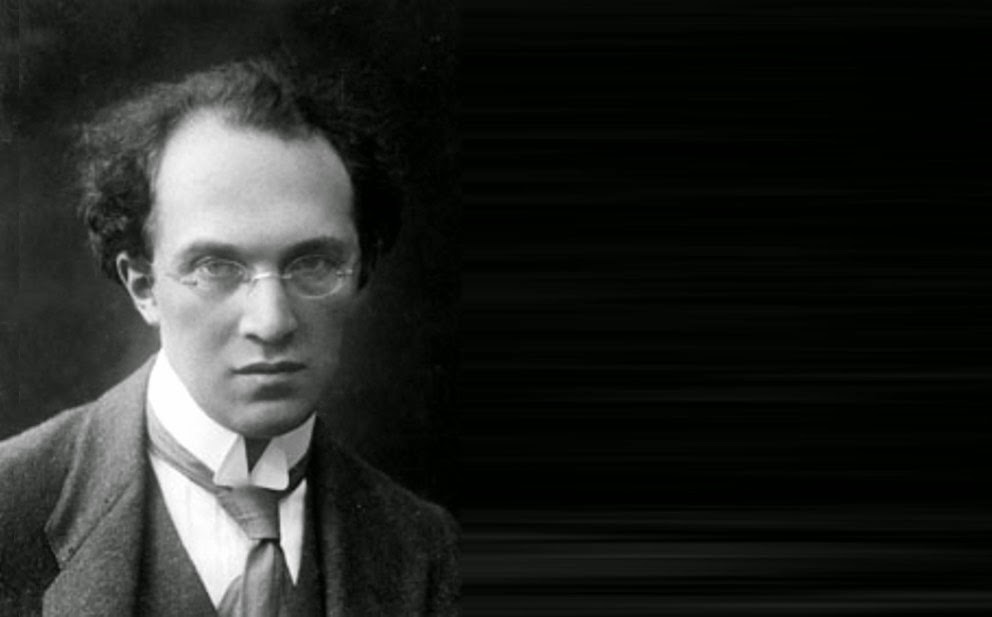
Franz Schreker

Schulhoff

Hindemith


Track list:

Franz Schreker "Der Geburtstag Der Infantin" The Birthday Of The Infanta (19:40)

1)Reigen (1:48)
2)Aufzug Und Kampfspiel (2:19)
3)Die Marionetten (2:40)
4)Menuett Der Tänzerknaben - Die Tänze Des Zwerges (2:51)
5)Mit Dem Wind Im Frühling: In Blauen Sandalen Über Das Korn - Im Roten Gewand Im Herbst (5:02)
6)Die Rose Der Infantin - Nachklang (4:58)

Erwin Schulhoff "Die Mondsüchtige" Moonstruck (23:49)

7)Introduzione - Ragtime (5:14)
8)Valse Boston (6:31)
9)Shimmy (2:32)
10)Step (1:40)
11)Tango (5:07)
12)Jazz (2:46)

Paul Hindemith - "Der Dämon" The Demon, Op.28 (34:28)

13)Tanz Des Dämons (1:16)
14)Tanz Der Bunten Bänder - Tanz Der Geängstigten Schwalben (5:51)
15)Tanz Des Giftes - Tanz Der Schmerzen (4:08)
16)Tanz Des Dämons (Passacaglia) - Tanz Der Trauer Und Sehnsucht (5:54)
17)Einleitung Zum 2. Bild - Tanz Des Kindes (3:36)
18)Tanz Des Weiten Gewandes - Tanz Der Geschlossenen Orchidee (6:51)
19)Tanz Der Roten Raserei - Tanz Der Brutalität (2:17)
20)Tanz Des Geschlagenen Tieres - Finale (4:31)

Enjoy!

Tanz_Grotesk_Hindemith_Schreker_Schulhoff_Tzadik.zip


http://www76.zippyshare.com/v/7P7PJn46/file.html

Saturday, January 17, 2015

Ervin Schulhoff - 'Concertos alla Jazz' - Piano Concerto - Double Concerto for Flute and Piano - Concerto for String Quartet - Piano Pieces (*Schulhoff, piano, 1928) - 'Entartete Musik' series - Decca 1995

This Schulhoff disc from London/Decca's "Entartete Musik" series (devoted to composers killed or suppressed by the Third Reich) is, certainly in my opinion anyhow, one of the highlights from this supremely important recording project. Schulhoff's artistic personality seemed at war with itself. On the one hand, just about everything he wrote displays a high degree of musicality and finish. On the other, he never seemed to settle on any one style for long. He loved American jazz. Indeed, he was one of the few Europeans who had heard the real thing early on and amassed one of the largest private jazz record collections in Europe. Yet aside from surface gestures, jazz never -really- influenced the music he wrote. In essence, Schulhoff used jazz just as Stravinsky, Weill, Honegger, early Hindemith, and Martinu did-as a way to clear out lingering spores of late nineteenth-century musical habits and gestures. For almost all of these men, jazz represented a way-station on the journey toward a deeply personal Modernism. Schulhoff, on the other hand, seems "unsettled," like Lukas Foss. His death leaves us with (time and again) speculations as to how his music would have continued.. 


This is an original German poster from 1938.

The Piano Concerto "Concerto for Piano and Small Orchestra" of 1923 is actually on the Koch Schwann disc that I posted directly before this post just a few days ago. As I wrote about the concerto in detail there, I shall refer the listener/visitor to that post from the 13th. I will say that I marginally prefer the Koch version.

The "Double Concerto for Flute and Piano" is one of my favorites and one of the composer's most artistically vigorous and psychologically most integrated works. Schulhoff wrote it for himself and the great French flutist Rene Le Roy as soloists. One gets from the work a great feeling of Paris in the Twenties (although Schulhoff didn't write it there exclusively) and of what the French imply by the word "mesure" - a sense of proportion, balance, elegance, and restraint. At the time, Paris, of course, had diverse strands and a wide expressive range of music, most of which derived from either Stravinsky or Debussy. From the fripperies of Les Six's "Les Mariés de la Tour Eiffel" to the granitic "Oedipus Rex" by Stravinsky, you could hear just about anything in Paris, probably the great music capital of Jazz-Age Europe. Schulhoff stands a little apart, but not much. The first two movements eschew shock for a noble and athletic neo-classicism-similar to the later works of Hindemith (and the American Walter Piston). For the third movement, Schulhoff creates a theme right at home with something light by Auric, Milhaud, or Poulenc-a cheeky combination of folk song and street ditty. Here, too, a jazzy passage flits through, sort of like a hotel band half-heard in the distance. All the movements are beautifully worked out. The byplay between the two instruments, soli and with the orchestra, satisfy beautifully. The orchestra doesn't merely accompany, as it does mostly in the Piano Concerto, and it doesn't dominate. Everybody gets their licks and, most importantly, takes part in the conversation. One might miss the competitive, heroic aspect in this concerto, but something more mature and congenial replaces it. This brings the concerto closer to the ethos of great chamber music. Martinu's concertante works especially often occupy the same exquisite cosmos. One cannot love this concerto too much!

For another take on it, check out this version of the Double Concerto posted in September:


The "Concerto for String Quartet" comes from the days of Schulhoff's experience as a radio and recording-studio musician, and the composer wrote it with contemporary 'electric-mike techniques' and capabilities in mind. Schulhoff emphasizes the contrast in sound between winds and brass (a 15-piece wind ensemble comprises the orchestra) and the string quartet. The soloists and tutti very rarely blend. The solo wind writing is mainly harsh and in-your-face (in a wonderfully Hindemithian way) despite a downright lovely opening to the second movement. What delicacy we encounter comes from its accompaniment to the string quartet-often just one or two instruments, so as not to drown out the strings-although the string writing itself is hardly gentle in idiom. The language, though neoclassical, sounds more Central European than French, coming close in spots to Bartok. The seriousness of emotional purpose has increased from Schulhoff's music in the early Twenties, without falling into his occasional early trap of neurotic obsession. One could fairly describe the concerto as "grave." The idiom differs from every other work on the CD-Schulhoff's mind getting restless again. The third movement begins like a folk dance from a very sophisticated village band, much like the faster parts of Bartok's Hungarian Sketches. Martinu and Hindemith fans should be especially delighted.

The solo piano pieces, historic documents played here by the composer himself, sound like bagatelles, interesting particularly for how far the music lies from the promise of the titles: "Tango," "Blues," "Charleston," "Tango-Rag," and so on. Some of the most interesting music comes from the "5 Etudes". The composer plays with a rhythmic elasticity that indicates his familiarity with real jazz playing. Since Schulhoff recorded these works in 1928, the sound of course is mono, but electrical rather than acoustical. There's a mild patina of surface noise, but nothing irritating. The performances are, needless to say, infectious and affecting. I cannot imagine a more poignant conclusion to this most exceptional disc.


Enjoy!

Schulhoff_Concertos_alla_Jazz(PART1)_Tzadik.zip

http://www72.zippyshare.com/v/myWm2Es1/file.html

Schulhoff_Concertos_alla_Jazz(PART2)_Tzadik.zip

http://www43.zippyshare.com/v/JRgI2bio/file.html