Monday, December 7, 2015

Khevrisa: European Klezmer Music - The Khevrisa Ensemble - Steven Greenman, Violin - Zev Feldman, Cimbalom - Alicia Svigals, Sekund (Trad. Fidlling) - Michael Alpert, Sekund - Stuart Brontman, Bass - Smithsonian Folkways 2000

I received a comment by Cecille, a representative of Smithsonian Folkways and thus the file to d/l this album I have removed. I am leaving the rest of the post here in hope that the cover art (and my enthusiasm!) will motivate you to seek it out and buy it,  as I did. Here is the Smithsonian Folkways
website (there's also a ton of important, historic recordings in their discography; one of my absolute favorites is all the original (1930s-40s) recordings of the legendary bluesman Leadbelly. Incredible stuff). Oh, I started to ramble, here is the website: http://www.folkways.si.edu/  Whether it's via Amazon or the direct link provided, please support this not-for-profit record label!!

Again, just the album art and my thoughts remain below:

Here's a very fine disc of traditional klezmer music; this is actual type of ensemble and music that my great-grandparents, great-great-grandparents and other relatives living in Poland, Ukraine, and Russia heard growing up, whether walking through their villages or during times of celebration. I have quite a sweet spot for this music, and I was really obsessed with klezmer for a good period of time (traditional, modern/avant-garde/jazz inspired/"downtown NYC" and so-called radical "New Jewish Music", as is best represented on many Tzadik recordings (John Zorn's Label). The musicians here are some of the finest in the world, and all of them have performed in many ensembles, modern and more traditional over the years (such as Alicia Svigals, founder of the 'Klezmatics', Michael Alpert and Stuart Brontman, both of 'Brave Old World', and Steven Greenman and Zev Feldman, the founders of the 'Khevrisa' ensemble heard here).I have seen the Klezmatics and Brave Old World at least 10 times each, and the atmosphere created by these passionate players in concert-ecstatic and mournful both, is hard to describe. I can say it's a rollicking good time though!   


Aharon Harlap - Symphony No. 2 "L'oiseau de la guerre" (The Bird of War) - Oded Zehavi - Concerto for Viola and Orchestra - Rivka Golani, Viola - The Haifa Symphony Orchestra, Stanley Sperber - Music In Israel 1997

As it is the second night of Hanukkah (Happy Hanukkah/Holidays to all!) and I have a bit of time I am posting a few discs by Jewish and Jewish/Israeli composers, however just one now-until I return home tonight. Here we have Israeli composer (originally from Canada) Aharon Harlap's powerful and exciting Symphony No. 2, "The Bird of War", which relates to the Gulf War of 1991 and was directly inspired by Dutch artist Hans Hogendoorn's painting, "The Bird of War". It is a moving and beautiful work (I especially enjoy the third movement, an almost Prokofievian or Satirical Shostakovich-like Allegro that features piano accompaniment of a dancing energic nature) that includes in the finale a part for soprano performing passages from Genesis and Isaiah. 


The Viola Concerto by Oded Zahavi is also a powerful work, not unlike his Violin Concerto, which I posted a while back. You can enjoy it here, if you haven't already:


Aharon Harlap (born 1941) is one of Israel's most prominent and well known (within Israel) composers and conductors. He was born in Canada, where he began his musical career as a pianist. He completed his studies in Music and Mathematics at the University of Manitoba in 1963, and in 1964 immigrated to Israel. 

He studied composition under P. Racine Fricker at London's Royal College of Music and with Oedoen Partos at the Tel Aviv Academy of Music. Harlap also studied conducting with Sir Adrian Boult in London, Hans Swarowsky in Vienna and Gary Bertini in Israel. Harlap is a senior lecturer in choral and orchestral conducting at the Jerusalem Academy of Music and he is also Music Director and conductor of the Kefar Sava Chamber Choir (since 1997).

Aharon Harlap has composed music in most genres, including vocal and choral works, chamber, music, many concertos (including a Viola Concerto dedicated to the international violist Rivka Golani, who is the soloist on this disc for the Zehavi Concerto), orchestral music (including two Symphonies - that is, I am only aware of two, there could very well be more) and Opera. In Israel he has appeared as guest conductor with most of the major orchestras, including the Israel Philharmonic, the Haifa Symphony Orchestra, the Israel Sinfonette Beer Sheva, the Kibbutzim Chamber Orchestra, the Israel Chamber Orchestra and the Jerusalem Symphony Orchestra. 

In 1979 Harlap was awarded a prize for his oratorio "The Fire and the Mountains" in an international competition on the subject of the "Holocaust and Rebirth". In 1983 he was the recipient of the ACUM prize for "Three songs for mezzo-soprano and symphony orchestra" set to poems by Leah Goldberg and Yehuda Amichai. In 1993 he won the Mark Lavry Prize for Composition, awarded by the Haifa Municipality for his choral-orchestral work "For dust you art, and to dust you shall return" (Genesis III). 

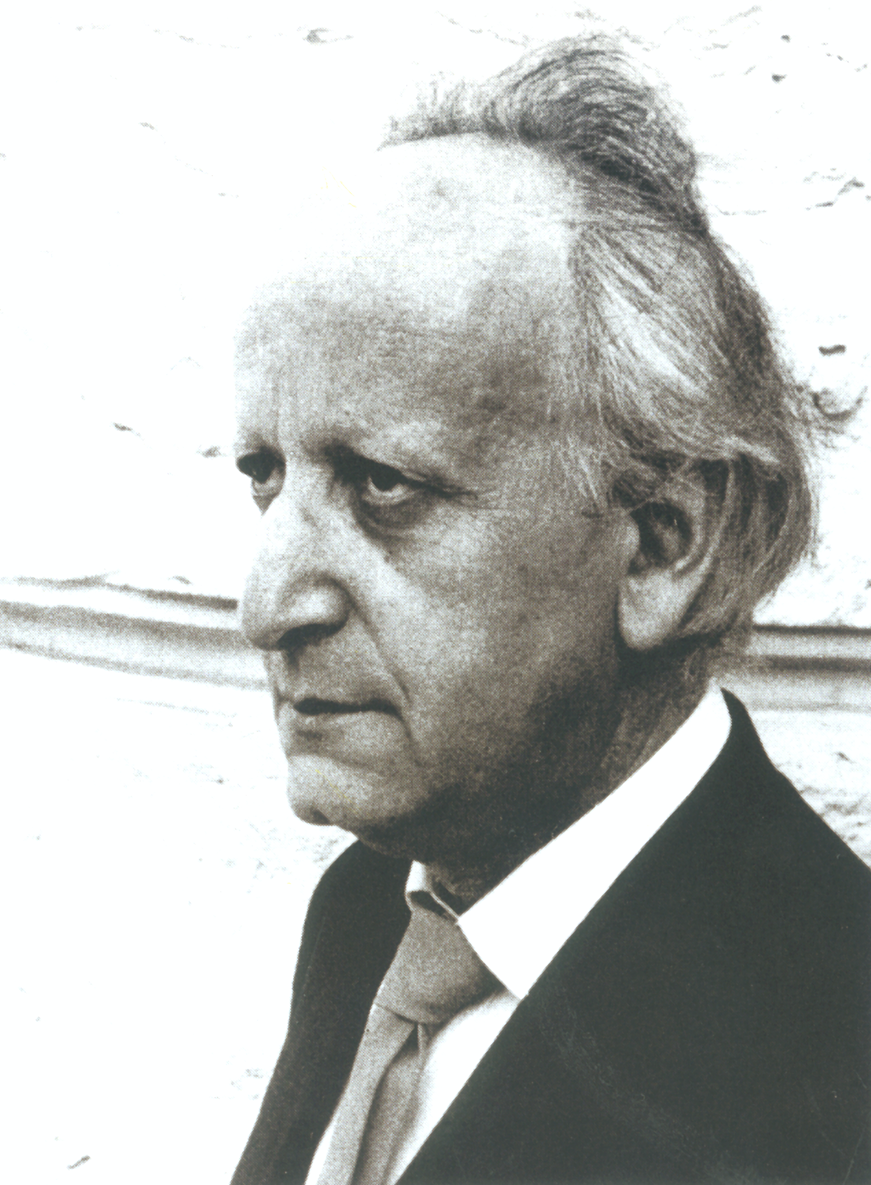
Aharon Harlap

In 1997 Harlap's opera "Thérèse Raquin" (based on the Emile Zola novel of the same name with libretto by Dana Gur) won a prize sponsored by the New Israel Opera, and in the same year he also received the ACUM Prize for his Clarinet Concerto. In 1999 he received the Prime Minister's Award for composition, and in 2004 the ACUM Prize again, this time for his Bassoon Concerto. 
The opera Thérèse Raquin was performed in May of 2005 at the annual Israel Festival, and received public and critical acclaim. 

2002 saw the world premiere of "The Divine Image" by the Illinois Symphony Orchestra conducted by Kenneth Kiesler, at that time music director and principal conductor of the orchestra. The work is written for soprano, mezzo soprano and baritone soloists, choir and symphony orchestra, and based on texts from William Blake, Psalms and Isaiah. Other Harlap works performed by Kenneth Kiesler and the Illinois Symphony Orchestra include the overture "Anniversary" and an orchestral suite based on Hanukah songs entitled "Music for the Festival of Lights". These works have also been performed throughout the years with other orchestras in the USA as well as in Israel. 

In 2001 Harlap was invited to Hungary to conduct the Dohnanyi Symphony Orchestra in Budapest. Among other works, the program included Harlap's Clarinet Concerto and "Pictures from the Private Collection of God", a song cycle for soprano solo, oboe and strings, composed to texts by Yaakov Barzilai, a Holocaust survivor originally from Hungary. The work met with great success, following which Harlap was again invited in 2003 and 2004 to conduct the Solti Chamber Orchestra, which again performed the same song cycle as well as another Harlap work based on texts from Psalms – a song cycle for soprano solo, clarinet and strings. Recently Hungary’s MAV orchestra performed another song cycle by Harlap, "My father will no longer bless the bread" also set to poems by Yaakov Barzilai and conducted by the Israeli conductor Yaron Gottfried. 

Aharon Harlap received the "Life Achievement Award" in 2008 from ACUM (Composers and Authors Organization of Israel) for his life's contribution to music in Israel as a composer. 

Hans Hogendoorn's "The Bird of War" can be view on this page: 


Enjoy everyone!

Music_In_Israel-Harlap_Symphony_2_Zehavi_Viola_Cto-Tzadik.zip

http://www54.zippyshare.com/v/h1BPN8Z1/file.html

Thursday, December 3, 2015

Roberto Sierra: Concerto Premieres - "Concierto Caribe", For Flute & Orchestra - "Of Discoveries", For Two Guitars & Orchestra - "Concierto Evocativo", For Horn & Strings - The St. Christopher Chamber Orchestra of Lithuania, Arie Lipsky - Fleur De Son Classics 1997

In the last post I mentioned that I have been listening to Roberto Sierra lately (prior offering contains a work by Sierra for Guitar and String Quartet..) and this gem of a disc of exciting and inventive concertos is one of the finest. Sierra is a prime example of a great American composer who is, more recently, finally getting his due (such as the recordings on Naxos...they're up to five recordings already!) and I hope this momentum continues. All three concertos here are a real delight; indeed, I find it's difficult to have a favorite as I enjoy them all so highly-Sierra's music always has something interesting to say, one might blissfully find that to be the case minute-by-mintute for the duration, no matter what work it is. I know I do. I'm most certain that the majority of visitors will adore this music!


*I know I rarely say this (I assume it's a given for serious collectors!!) but please please do buy the music - all the Naxos releases and well all other available recordings if your budget allows! Naxos especially is beyond a musical godsend, needless to say, and although it's the most popular and (still all these years later!) most affordable classical label - the day could easily come when the glorious, seemingly non-stop flood of the highest quality releases could be reduced to a trickle. There are plenty of now defunct labels that were spectacular. We mustn't forget that as an audience we are *the* specialist group, no matter how many esoteric and non-esoteric discs alike seem to be available and easily accessible..


To save myself the time for now, here are some notes about Roberto Sierra:


Roberto Sierra has been part of the repertoire of many of the leading orchestras, ensembles and festivals in the USA and Europe. At the inaugural concert of the 2002 world renowned Proms in London, his Fandangos was performed by the BBC Symphony Orchestra in a concert that was broadcast by both the BBC Radio and Television throughout the UK and Europe. Sierra's numerous commissions include works for many of the major American and European orchestras. International ensembles that have performed his works include the orchestras of Philadelphia, Pittsburgh, Atlanta, New Mexico, Houston, Minnesota, Dallas, Detroit, San Antonio and Phoenix, as well as by the American Composers Orchestra, the New York Philharmonic, Los Angeles Philharmonic, National Symphony Orchestra, Royal Scottish National Orchestra, the Tonhalle Orchestra of Zurich, the Spanish orchestras of Madrid, Galicia, Castilla y León and Barcelona, among others.

Commissioned works include: Concerto for Orchestra for  the centennial celebrations of the Philadelphia Orchestra commissioned by the Koussevitzky Music Foundation and the Philadelphia Orchestra; Concerto for Saxophones and Orchestra commissioned by the Detroit Symphony Orchestra for James Carter; Fandangos and Missa Latina commissioned by the National Symphony Orchestra of Washington DC; Sinfonía No. 3 "La Salsa", commissioned by the Milwaukee Symphony Orchestra; Danzas Concertantes for guitar and orchestra commissioned by the Orquesta de Castilla y León; Double Concerto for violin and viola co-commissioned by the Pittsburgh and Philadelphia Orchestras; Bongo+ commissioned by the Juilliard School in celebration of the 100th anniversary; Songs from the Diaspora commissioned by Music Accord for Heidi Grant Murphy, Kevin Murphy and the St. Lawrence String Quartet; and Concierto de Cámara co-commissioned by the the Santa Fe Chamber Music Festival, Chamber Music Northwest and Stanford Lively Arts.

In 2003 he was awarded the Academy Award in Music by the American Academy of Arts and Letters. The award states:  "Roberto Sierra writes brilliant music, mixing fresh and personal melodic lines with sparkling harmonies and striking rhythms. . ." His Sinfonía No. 1, a work commissioned by the St. Paul Chamber Orchestra, won the 2004 Kenneth Davenport Competition for Orchestral Works. In 2007 the Serge and Olga Koussevitzky International Recording Award (KIRA) was awarded to Albany Records for the recording of his composition Sinfonía No. 3 “La Salsa”. Roberto Sierra has served as Composer-In-Residence with the Milwaukee Symphony Orchestra, The Philadelphia Orchestra, The Puerto Rico Symphony Orchestra and New Mexico Symphony. In 2010 he was elected to the prestigious American Academy of Arts and Sciences.

Roberto Sierra's Music may be heard on CD's by Naxos, EMI, New World Records, Albany Records, Koch, New Albion, Koss Classics, BMG, Fleur de Son and other labels. In the spring of 2004 EMI Classics released his two guitar concertos Folias and Concierto Barroco with Manuel Barrueco as soloist (released by Koch in the USA in 2005). Roberto Sierra was born in Vega Baja, Puerto Rico, and studied composition both in Puerto Rico and Europe, where one his teachers was György Ligeti at the Hochschule für Musik in Hamburg, Germany. The works of Roberto Sierra are published principally by Subito Music Publishing (ASCAP).


Track listing:

Concierto Caribe, For Flute & Orchestra

1) I. Figuras
2) II. Claro de luna
3) III. Sabor

Of Discoveries, For Two Guitars & Orchestra

4) I. Ocean
5) II. Stars
6) III. Land

Concierto Evocativo, For Horn & Strings

7) I. Lento
8) II. Scherzando
9) III. Ritmico y Energico


Enjoy!

Roberto_Sierra-Concerto_Premieres-Tzadik.zip

http://www98.zippyshare.com/v/kLSdzKAc/file.html

Acoustic Counterpoint: Classical Guitar Music from the 1980's - Sir Michael Tippett, The Blue Guitar - Reich, Electric Counterpoint (solo guitar) - Maxwell Davies, Sonata - Roberto Sierra, Triptico - Toru Takemitsu, All In Twilight - David Tanenbaum, Guitar - The Shangihai Quartet - New Albion 1990

I haven't posted any guitar music in a long time (actually I haven't posted enough guitar music on here period) so here is a very fine disc on New Albion with one of my favorite guitarists, David Tanenbaum. I thought to post this recording because I have been listening to a lot of Roberto Sierra lately, chamber music and a few wonderful concertos in particular, and I just found this in my piles. Sierra's "Triptico", which I barely remember, is scored for Guitar and String Quartet, and I am really warming up to it, the second of the three movements "Ritmico" is especially electric and this might just become my favorite work here. 


I have always been fond of Tippett's "The Blue Guitar", and here Tanenbaum plays it rather straightforwardly, and crisply; this is not a bad thing, Tanenbaum strums with great precision, his take is just a tad more serious in atmosphere. My favorite version is on an older Nimbus disc entitled "The Blue Guitar", definitely a disc I'd want to share with all of you when I can find it. Takemitsu's "All In Twilight" is a gentle, contemplative work-the four movements a state of musical nirvana (as one would expect!). Steve Reich's "Electric Counterpoint", which otherwise I could take or leave-is here presented in its guitar arrangement (what a bloomin' surprise ay??) and I do enjoy it-as in it's Reich that I would actually give repeat listenings. The least interesting piece for me personally is the Sonata by Peter Maxwell Davies. It's not bad at all, it's just these ears. I have never been a huge fan of Maxwell Davies for whatever reason.


Enjoy ye guitar-heads and explorers alike!

David_Tanenbaum-Acoustic_Counterpoint-Tzadik.zip

http://www81.zippyshare.com/v/77poygiP/file.html

Béla Bartók - Concerto for Orchestra - Dance Suite - The Miraculous Mandarin (Suite) - London Symphony Orchestra, Sir Georg Solti - Decca 1965 (Remastered, 2001)

A truly great Bartok recording, this. Many of you will already own it I'm sure, but since I have enjoyed listening to it so very much today (and every time) I feel like posting it, anyone who does not own this classic Bartok should have it in their library! Sir Georg Solti was one of the great conductors, and Bartok was one of his specialties; every moment under his baton is fiery and passionate.


-Which recording do you all prefer, Solti conduction the London Symphony Orchestra here, or the more recent and digital performances of Solti conduction the Chicago Symphony Orchestra? I love both about equally, although ever since this Decca recording has been remastered so superbly, I suppose it has the edge for me.


Sir Georg Solti

No other words are necessary for such brilliant, classic repertoire, so for those visitors who find this recording to be new-enjoy all the Bartokian beauty, power (and especially in the Miraculous Mandarin.....violence :)  


Concerto For Orchestra, Sz. 116

1) Introduzione - Andante non troppo - Allegro vivace (9:22)

2) Giuoco della coppie - Allegretto scherzando (6:50)

3) Elegia - Andante, non troppo (6:32)

4) Intermezzo interrotto (Allegretto) (4:16)

5) Finale - Pesante - Presto (9:22)

Dance Suite, Sz. 77

6) Moderato (3:33)

7) Allegro molto (2:14)

8) Allegro vivace (2:49)

9) Molto tranquillo (2:36)

10) Comodo (0:59)

11) Finale - Allegro (3:58)

12) The Miraculous Mandarin, Suite BB 82, Sz. 73 (17:46)


Bartok-Cto_for Orchestra_Etc.-Tzadik.zip

http://www21.zippyshare.com/v/gu2iTyzH/file.html

Wednesday, December 2, 2015

Benjamin Frankel - Violin Concerto "In Memory of The Six Million" - Viola Concerto - Serenata Concertante for Piano Trio & Orchestra - Ulf Hoelscher, Violin - Brett Dean, Viola - Queensland Symphony Orchestra, Werner Andreas Albert - CPO 1998

Here is one of the best discs in CPO's indispensable series devoted to the great music of the long-neglected British composer Benjamin Frankel (once described by William Mann in The Times as "our most eloquent symphonist"). These are world premiere recordings of his Violin Concerto, Viola Concerto and Serenata Concertante, this CD commemorating the 25th anniversary of his death (February 12th, 1973). I first discovered Frankel's music whilst watching a fascinating program, around 18 years ago, about obscure British composers on PBS (Public Broadcasting in the States-one of the few channels worth watching anytime of day) that I was lucky enough to stumble upon. How I wish I could recall the name of that most enlightening documentary! I would just love to own a copy.


Benjamin Frankel was Born in London to parents of Polish-Jewish origin. His apprenticeship to a watchmaker at the age of 14 lasted for only about a year when his pianistic talents attracted the attention of the American pianist Victor Benham who persuaded his parents to allow him to study music full-time. Still in his teens, Frankel began to earn his living as a jazz pianist, violinist and arranger. By the early 1930's he was in great demand as an arranger and musical director in London's West End. Eventually he became one of England's best known film music composers, writing ultimately over 100 scores.

These things, especially in the the orthodox musical climate of England, obscured the fact that he had begun a substantial output of 'serious' music. At first mainly chamber music, the first major work to bring him to wider public attention was the Violin Concerto dedicated "In memory of 'the six million'", a reference to the Jews slaughtered in the Holocaust. It was commisioned for the 1951 Festival of Britain and first performed by Max Rostal.

During the last fifteen years of his life Frankel emerged as a leading symphonic composer, writing a cycle of eight Symphonies, other orchestral and chamber works and a three-act opera based on John Whiting's Marching Song. In this last creative period he came to his own unique view of 12-note composition that retained contact with tonality.

On his death, a twenty year long period of almost complete neglect was eventually terminated by the decision of a German record company, cpo, assisted by the Australian Broadcasting Corporation, to record his entire output. This made it possible for the BBC to make him Composer of the Week in late 1996 and for such comments as the following to appear:

"Our neglect of Benjamin Frankel is not something we can be proud of …The two symphonies in this enterprising disc are outstanding examples of his work, colourfully scored and pungently concise…"
Michael Kennedy

Sunday Telegraph 5th June 1994
"His rediscovery now is as welcome as it is long overdue…"

"....worthy of a place alongside any of the acknowledged great symphonists of the 20th 
century....Not to be missed." - Ateê Orga in BBC Music Magazine, June 1994.


Inscribed in memory of the Six Million (Frankel's personal comment on the atrocities of the Holocaust), Frankel's Violin Concerto is a deeply poignant work, with much lyrical power, considered by many to be his masterpiece. Lovers of the Viola will find much to cherish in the Viola 
Concerto from 1967, a work that should be performed, like all of his output-with *some* frequency at the least. The same can be said of the Serenata Concertante for Piano Trio and Orchestra from 1960, a lighter piece with many sprightly passages. In all three works Frankel's Tonal/Serialist style is in glorious full bloom. My other favorites in the priceless CPO Frankel series include the complete String Quartets, a disc of works for String Orchestra and the complete Symphonies (Frankel wrote eight of them).


The extremely informative booklet notes I have included.

Enjoy everyone!

Benjamin_Frankel_Concertos_Serenata-Tzadik.zip

http://www77.zippyshare.com/v/gf2zMXeA/file.html

Tuesday, December 1, 2015

Ludolf Nielsen - Lackschmi (Complete Ballet) - "Isabella" Overture - Queensland Symphony Orchestra, Werner Andreas Albert - CPO Records 2006

Hello everyone. I know it's been quiet around here, been busy but I am (mostly) back to share the wealth :) Here is one highly interesting offering before I get to work.

Ludolf Nielsen (absolutely no relation to the great Carl Nielsen - although they were close contemporaries - Carl Nielsen was the elder by 11 years) was an extremely gifted composer and lately I have been exploring his music again. This highly enjoyable disc is full of some of Nielsen's most colorful and exciting music. 


Ludolf Nielsen (January 29th, 1876 to October 16th, 1939) was a Danish composer, violinist, conductor, and a pianist. Today he is considered as one of the most important Danish composers of the early 1900s. He belongs among the last Danish Romantics and in his own refined way he continued the National Romantic tradition, but also incorporated many new features from Late Romantic music abroad (such as the exoticism we hear in the exciting Lackschmi Ballet). Nielsen was born in Nørre Tvede, Denmark, and although his family lacked any musicians Ludolf took to music at a very young age. Like his namesake Carl Nielsen, Ludolf Nielsen was from a peasant family, and as a young boy he took violin lessons from local fiddlers (when he was eight he played at local festivals and other country occasions). 


In his mid-teens, he moved to Copenhagen, which exposed to a much more musical society. When he was 19, Ludolf won a scholarship to the Danish Royal Academy of Music from a contest. There, he studied violin, piano, and music theory. Supposedly, his composing talents were self-taught, and Ludolf mastered the art of composition quickly. His considerable skill in orchestration towered above the Danish standard of the day, with the exception of course of Carl Nielsen, the greatest Danish composer of all time. It was when he was about 20 that Ludolf Nielsen started composing music seriously, and soon thereafter he also sent his time as a violinist with the Tivoli Orchestra. Some of his works were performed in 1899, but his first major success was with the symphonic poem "Regnar Lodbrog" (about a legendary Norse ruler) which gained him an additional scholarship that let him spend time in the musically rich city of Leipzig, there he composed a few string quartets and had them published. He returned to Copenhagen and was conductor of the Tivoli Orchestra. In 1902, he composed his First Symphony, and between 1903-1905 a tone poem "From the Mountains". Just after his marriage in 1907, Nielsen composed a Romance for Violin (1908) and his Second Symphony (1907-1909). Like many other artists of the time, World War I had a profound affect on Nielsen, and he didn't compose anything else until 1914, which brought his Symphony No. 3. After the War, he became a private music teacher for a period of time, then returned to composing. The two most important works from this period are his ballet "Lackschmi" (Lakshmi is the goddess of wealth beauty, luck, light, wisdom) of 1922 which was a great success for the Royal Ballet, and the orchestral suite "Skovvandring" (Forest Journey). Later works, for example the choral work "Babelstårnet" (The Tower of Babel) and the last of his three symphonies, have a Symbolistic, philosophical content, while his last compositions are leaner and marked by nature lyricism. After these major works Nielsen wrote almost 100 Lieder. Between 1926 and 1939, Ludolf worked as a programmer for the Danish National Radio Corporation, and with the exception of a few radio plays, he ceased composing. Nielsen died in Copenhagen on October 16th, 1939 at the age of 63.

I will likely share all of the Dacapo discs and a few more on CPO soonish.


1) Overture "Isabella" Op.10

"Lackschmi" 

2) Prelude/Indian March
3) Lackschmi's Dance
4) Padmavati's Dance
5) Lento Appassionato
6) Interlude
7) Scene Music
8) Scene Music/Entry March
9) Bayadere Dance
10) Ino's Dance
11) The Tournament
12) The Contest Between The Prince And Veramadeva
13) Lento
14) Allegro Ma Non Troppo
15)The Dance Of Death/The Flames  

Enjoy!

Ludolf_Nielsen-Lakshmi-Tzadik.zip

http://www2.zippyshare.com/v/cJYwqpVw/file.html