Friday, February 13, 2015

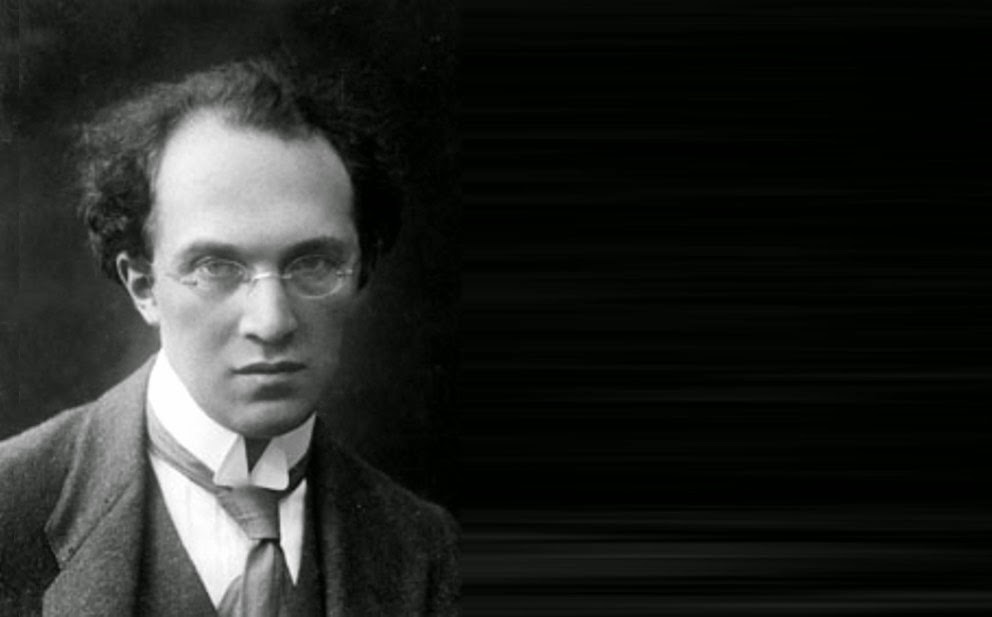
Jeronimas Kačinskas - Chamber & Instrumental Music - Nonet for Woodwinds & Strings - Reflections for Piano - Chamber Fantasy for Flute, String Quartet. & Piano - String Quartet No. 3 - Toccata Classics 2013

This disc is from a pile of never opened, immaculately plastic-wrapped discs that I bought mostly in 2013 (I won't admit as to how many such piles I happen to have!) in this case. Sometimes I find unopened discs that I bought over a decade ago-and I must say it's actually a great feeling, especially with my financial state preventing the purchase of anything these days. I find myself excited as if I had just "pulled it from the racks" of a record store (remember those, ladies and gents??) or just received it via snail-mail :)

That said, I am actually listening to the opening work, "Nonet for Woodwinds and Strings" as I type.
I have never heard Kačinskas's music before and thus far I'm not sure what I think. Certainly it is well made. Hopefully more of a musical personality will emerge as the music continues..

I managed to find the booklet notes (pdf file) online and they seem quite lengthy and hopefully informative.

So, let's explore this obscure Lithuanian composer together, shall we? ;)


Enjoy I hope!

Kačinskas-Chamber_&_Instrumental_Music_Tzadik.zip

http://www59.zippyshare.com/v/7MUmIaxU/file.html

Schubert: Arpeggione (cello version) - And works for Cello and Piano by Schumann - Debussy - Britten - Gautier Capuçon, Cello - Frank Braley, Piano

Staying within the realm of more "familiar" composers/repertoire, this is a fantastic disc with some of the finest cello and piano literature, complimented by some of the finest playing by cellist and pianist alike. I know these pieces well, however it's the Britten Cello Sonata that I have somehow managed to listen to the least over the years. No reason, just unfortunate for me. It is Britten's Sonata in C that I enjoy the most on this recording, indeed I think it is here revealed at one of the greatest works of the 20th century for cello and piano.


Cellist Gautier Capuçon has stated that he and pianist Frank Braley wanted to pay tribute to two twentieth-century legends, Mstislav Rostropovich and Benjamin Britten. Thus, they recorded the same works their illustrious predecessors put down for Decca in the late 1960s and early 1970s.
Next to Capuçon and Braley, Rostropovich and Britten sound rather heavy and deliberate. It is not just a matter of tempos, (though the latter team are nearly two minutes slower in the first movement) but of the entire approach to the music. 


The notes mention that "The arpeggione, a cross between the guitar, cello and bass viol, owes its moment of glory to Franz Schubert. Something of a hybrid, this fretted six-stringed instrument, devised by the Viennese instrument maker Johann Georg Stauffer in 1823, was held between the knees like the viola da gamba. It has sometimes been described as a 'bowed guitar', 'guitar d-amore' or 'guitar cello', but the name "arpeggione" had its origins in the ease with which the instrument could be tuned (E, A, D, G, B, E, like the guitar), and played in arpeggios".

Only, after all that, we don't get the arpeggione on this disc. Gautier Capuçon plays Schubert's Sonata in "A major" (pretty sure it's actually A Minor) for Arpeggione and piano, D.821 (the piece usually referred to simply as the "Arpeggione", after the featured instrument) on the cello, since the original arpeggione had a heyday of only about ten years; with the exception of a very few recordings using reconstructed arpeggiones, musicians have performed the music on the cello since the mid nineteenth century. Pianist Frank Braley accompanies Capuçon on a modern Steinway D-274 piano, and together the musicians make the piece come to life in innocent splendor, regardless of the instruments used. The whole piece is wonderfully melodic, and receives the most lyrical interpretation, while still keeping the music lively and Romantic. By turns the opening movement can be poetic, energetic, introspective, wistful, sentimental, vigorous, and beautiful.

The Debussy Cello Sonata is one of three chamber sonatas from late in the composer's life. It packs a lot of material in its short duration and is both whimsical and enigmatic. Debussy initially considered calling it "Pierrot angry with the moon", owing to his preoccupation with the figures of the harlequinade.  It is an extremely fine work, along with the Violin Sonata and the sublime Sonata for Flute, Viola and Harp that comprise the other two sonatas of this period. 

Schumann's Pieces in Folk Style are from the composer's productive year of 1849 before his mental health completely deteriorated and his attempt at suicide. From the mood of these pieces (humorous, Gypsy-like tunes to innocent lullabies) with their freshness and originality one would not guess that Schumann was in such a fragile state. These miniatures are for the most part lighthearted with the first piece marked "with humour", followed by a lullaby, a ballad, a march, and a zesty finale.  

This Erato gemstone concludes with the Cello Sonata Benjamin Britten composed for Rostropovich, for whom he also wrote his three Cello Suites and Cello Symphony. While the Rostropovich/Britten recording retains its authoritativeness, there have been more recent versions that have challenged but not surpassed them. Such is the recording under review here. In the first movement Rostropovich/Britten are a bit faster and more lyrical, while Capuçon/Braley are more assertive-even aggressive at times. Rostropovich's playing in the second movement, Scherzo-Pizzicato, is guitar-like, while Capuçon's pizzicato is a bit reminiscent of Bartók in the Music for Strings, Percussion and Celesta. Somehow I cannot get past the Scherzo-Pizzicato movement without hitting repeat a few times! Capuçon/Braley are heavier and darker in the third movement Elegia with their tread being very Slavic and reminding of Shostakovich. By contrast Rostropovich/Britten are warmer with the piano less prominent, but with exceptionally sensitive playing by both artists. The same is true for the fourth movement march that is spiky and eerie with excellent dialogue between Rostropovich and Britten. Capuçon/Braley are not as incisive and a bit heavier, but also excellent as a team. Both teams contribute a very exciting finale and neither disappoints in any way. I will be listening to this glorious Sonata with much more frequency now.. 

Enjoy!

Arpeggione_Schubert.Debussy.Schumann.Britten_Tzadik.zip

http://www26.zippyshare.com/v/97hxOMqW/file.html

Tuesday, February 10, 2015

Bach & Weiss: Suite for Lute and Violin in A Major - Johann Kropffganss - Karl Kohaut - Friedrich Wilhelm Rust - Music for Lute, Violin and Cello - Vivarte 2001

This disc is like a bowl of candy, for anyone who loves Baroque music and lute music especially. I certainly do and the "Bach/Weiss" Suite for Lute and Violin in A Major is just sublime. The works by the three lesser known composers are also very fine, and one delight following another is the result on this album. I'm only adding here information about Weiss and the connection with Bach-you can read about the other composers (and more info on Bach/Weiss)  in the booklet notes.


Silvius Leopold Weiss was, and still is, regarded as the greatest of all lutenists, and the instrument fell into decline within two decades of his death. An evaluation by the Markgrafin Wilhelmine de Bayreuth, sister of Frederick II of Prussia and herself a composer, would serve well as epitaph: "Weiss excels so much in playing the Lute that no one has ever matched him, and those who will come after him will only be left with the glory of imitating him"

Weiss was one of the most important and most prolific composers of lute music in history and one of the best-known and most technically accomplished lutenists of his day. He wrote around 600 pieces for lute, most of them grouped into 'sonatas' (not to be confused with the later classical sonata, based on sonata form) or suites, which consist mostly of Baroque dance pieces. Weiss also wrote originally extensive repertory of chamber music, lute duets, and concertos, but only the solo parts have survived; in every case the parts that accompany the solo lute are lost. Some of his "Suonate" (Weiss's own term) for solo lute, which have come down to us in a variety of tablature manuscripts, are missing their preludes, which were usually improvised. Seventy suites, however, are known in their entirety; most last about 20 to 25 minutes in performance. As a composer, Weiss shows extraordinary originality; his suites stand comparison with those of J.S. Bach. Only one of the suites, No. 49 in B flat minor, appeared in print during Weiss' own lifetime; his work was not intended for amateur players but for virtuosi whose skills approached his own. 

Weiss's music is characterized by a unique understanding of the capabilities of his instrument, and its strengths and its weaknesses. Like J.S. Bach's, it represents the culmination of a high Baroque style a little at odds with the more progressive aspirations of his younger contemporaries. Weiss was also in demand as a teacher. His many aristocratic pupils included the young Frederick the Great and his sisters Wilhelmena (later Margravine of Bayreutlt) and Anna Amalia, Princess of Prussia, and his other pupils included the lutenists Adam Falckenhagen and Johann Kropffganss (whose own music is on this recording)

Silvius Leopold Weiss


Silvius Leopold Weiss's skill as a player and accompanist was legendary, as were his powers of improvisation. In this he was even compared with J.S. Bach, though it is doubtful whether they actually formally competed in improvisation, as the following account by Johann Friedrich Reichardt describes:

"Anyone who knows how difficult it is to play harmonic modulations and good counterpoint on the lute will be surprised and full of disbelief to hear from eyewitnesses that Weiss, the great lutenist, challenged J. S. Bach, the great harpsichordist and organist, at playing fantasies and fugues."

Weiss and J.S. Bach had been in all probability well known to one another even before they actually met. In later life, Weiss became a friend of Wilhelm Friedemann Bach. During 1739 Weiss stayed in Leipzig for four weeks (together with W.F. Bach and his own pupil Johann Kropffganss) and he visited the J.S. Bach house frequently. Johann Elias Bach, J.S. Bach's personal secretary, reports that the music he heard then was 'extra-special'. He wrote that "we heard some very fine music when my cousin from Dresden (Wilhelm Friedemann Bach) came to stay for four weeks, together with the famous lute-player Mr. Weiss". J.S. Bach's Suite for violin and harpsichord in A major BWV 1025, which was finally identified as an arrangement of one of Weiss' lute sonatas, likely owes its origin to one of these legendary meetings. It's quite special to these ears!

Enjoy...

Bach_&_Weiss_Suite_for_Lute_&_Violin_Tzadik.zip

http://www38.zippyshare.com/v/WxDiPxt0/file.html

Tantz Grotesk - Schreker: 'Der Geburtstag Der Infantin' Schulhoff: 'Die Mondsüchtige' Hindemith: 'Der Dämon' ('Entartete Musik' Series, Decca, 1995) Gewandhausorchester Leipzig, Lothar Zagrosek

Here is another interesting disc from Decca's 'Entartete Musik' series, one of the most important and rewarding musical surveys of the 20th century, and from a major label no less. My personal favorite here is Paul Hindemith's "Der Dämon", although the other two scores also make for enjoyable listening-stylistically in very different ways.


The three "grotesque" ballet scores fulfill most of the Nazis's criteria for 'degenerate music': two of them are by Jewish composers, one of which is jazz-based with 1920's-1930's "bad boy" expressionism and cacophony, and the third is by that then "unreformed" avant-gardist, Hindemith. Of the three composers, Schreker, sacked from his academic posts, died from the shock within months of the Nazis's rise to power; Schulhoff, whose devotion to Communism led him to take Soviet citizenship, died in a Bavarian concentration camp in 1942 as mentioned in prior Schulhoff posts. And Hindemith escaped into exile. All three works, though, were written during the heady years of the Weimar Republic, or earlier. "The Birthday of the Infanta" by Schreker (a 1922 suite from a 1908 score) is a melodious and colorful dance-pantomime and based on the same Oscar Wilde story that was later to inspire Zemlinsky’s finest opera. Schreker’s music here is luminous, often poignant, and sounds somewhat like a Viennese Respighi, while Schulhoff's "Moonstruck" (1925) which is subtitled "a dance grotesque", has his 1920's signature ragtime, jazzy, raucous atmosphere. Hindemith’s "The Demon" (1922), scored for chamber ensemble and set to a disturbing scenario by Max Krell about a sadomasochistic demon that subjugates two sisters, is one of his more colorful and engaging works (and actually just a tad more "accessible" I'd say for those who are normally not Hindemith fans) and was his first ballet. Like his contemporaneous opera "Cardillac," the work is notable for the contrast between its expressionist subject and the dry objectivity with which Hindemith treats the subject musically.

Franz Schreker

Schulhoff

Hindemith


Track list:

Franz Schreker "Der Geburtstag Der Infantin" The Birthday Of The Infanta (19:40)

1)Reigen (1:48)
2)Aufzug Und Kampfspiel (2:19)
3)Die Marionetten (2:40)
4)Menuett Der Tänzerknaben - Die Tänze Des Zwerges (2:51)
5)Mit Dem Wind Im Frühling: In Blauen Sandalen Über Das Korn - Im Roten Gewand Im Herbst (5:02)
6)Die Rose Der Infantin - Nachklang (4:58)

Erwin Schulhoff "Die Mondsüchtige" Moonstruck (23:49)

7)Introduzione - Ragtime (5:14)
8)Valse Boston (6:31)
9)Shimmy (2:32)
10)Step (1:40)
11)Tango (5:07)
12)Jazz (2:46)

Paul Hindemith - "Der Dämon" The Demon, Op.28 (34:28)

13)Tanz Des Dämons (1:16)
14)Tanz Der Bunten Bänder - Tanz Der Geängstigten Schwalben (5:51)
15)Tanz Des Giftes - Tanz Der Schmerzen (4:08)
16)Tanz Des Dämons (Passacaglia) - Tanz Der Trauer Und Sehnsucht (5:54)
17)Einleitung Zum 2. Bild - Tanz Des Kindes (3:36)
18)Tanz Des Weiten Gewandes - Tanz Der Geschlossenen Orchidee (6:51)
19)Tanz Der Roten Raserei - Tanz Der Brutalität (2:17)
20)Tanz Des Geschlagenen Tieres - Finale (4:31)

Enjoy!

Tanz_Grotesk_Hindemith_Schreker_Schulhoff_Tzadik.zip


http://www76.zippyshare.com/v/7P7PJn46/file.html

Monday, February 9, 2015

Paul Hindemith - Organ Sonatas Nos. 1-3 - Two Organ Pieces - Eleven Interludes from Ludus Tonalis - Kirsten Sturm, Hubert Sandtner Organ, Rottenburg Cathedral - Naxos 2014

It took me many years to warm up to and have the patience for serious organ music, but I think once you get it, you "get it". The organ provides endless musical possibilities, and one needn't look much further than JS Bach's massive and towering output to hear why. Durufle, Widor, Sowerby, Willan, Jongen, Petr Eben and Samuel Adler also come to mind especially for me. Also I have to say I am not a fan of Phillip Glass (exceptions being his String Quartets and certain 'sections' from a few of his operas) however his organ works (some of which are taken from other compositions) are among my favorites from the entire Organ repertoire. The "Glass Organ Works" disc on Catalyst is imo a real treasure chest of 20th century organ pieces. If people are interested, I wouldn't hesitate to post it.
Hindemith’s three organ sonatas especially are superbly composed and nicely compact. (They have with justification been described as cornerstones of 20th century organ repertoire) The Interludes taken from Hindemith's large and important piano work "Ludus Tonalis" also are especially fine.


Paul Hindemith was actually no organ music specialist. Despite, or perhaps precisely because of this, he created a body of work that is an integral part of twentieth-century organ literature and is nowadays, after a long period of reserve on the part of many organists, very popular. As mentioned above three Organ Sonatas are among the great works of modern organ literature.

As a musician, Hindemith was an all-rounder. After receiving a comprehensive education from Bernhard Sekles and Arnold Mendelssohn (composition) and from Adolf Rebner (violin), he joined the Frankfurt Opera Orchestra and was its concert master from 1915 to 1923. He played viola in the famous Amar Quartet from 1922 to 1929, made concert appearances as a soloist and conductor worldwide, and was Professor of Music Theory at the Hochschule fur Musik (Academy of Music) in Berlin from 1927 to 1934. The Nazis considered his music to be "degenerate art", so the composer, whom Goebbels had reviled as an "atonal noisemaker", left Nazi Germany, living first in Switzerland, from 1938, and then, from 1940 onwards, in the United States, where he taught at Yale University in New Haven until 1953. That year he returned to Switzerland to teach theory of music at the University of Zurich. With the all-embracing reach of Hindemith’s work and interests as an artist came an engagement with the compositional questions of his day that is reflected in his didactic work Unterweisung im Tonsatz (1937–39; published in English as The Craft of Musical Composition) and his book A Composer’s World (1952, published in his own German translation in 1959 as Komponist in seiner Welt).

Hindemith’s music belongs to the great German tradition of Bach and Max Reger. He thought very highly of the latter, once saying: "Without him, I am unimaginable". A mastery of counterpoint, clarity of form, a bold and emancipated harmonic language that nevertheless adheres to "tonal centers", original and transparent structuring of thematic material, an interest in the individual characters and demands of instruments that is both questing and open to experiment—such are the stylistic elements that make Hindemith’s musical language unmistakable. He approached the organ not as a specialist, but with the wealth of experience he had accumulated as a composer with an overall plan; between 1935 and 1943 he wrote, in quick succession, 22 sonatas for all the main orchestral instruments. His Organ Sonatas are part of this overarching artistic development, and it is this which gives them their individual character and makes them seem new, distinctive and original, even though they build on existing tradition.

Influenced by World War I, in which his father lost his life in 1915 and he himself fought as a soldier in 1917–18, Hindemith found his way to an unsentimental musical style of “Neue Sachlichkeit” ("new objectivity"), turning away from the Romantic pursuit of emotional expression. He became interested in historical performance practice—he himself played the viola d’amore—and was aware of the efforts of the so-called "Orgelbewegung" or organ reform movement to reconstruct period organs and perform Baroque music in an authentic manner. Here too, his lack of specialization was an advantage: he was not wedded to the organ reform movement’s agenda, and he did not limit the organ to its allegedly polyphonic character, instead approaching it with the same openness and curiosity that he brought to every other instrument. And since his musical style exhibited polyphonic and contrapuntal characteristics in any case, he did not need to make any particular song and dance about polyphony in his organ works. Nowhere in his organ music does he employ sacred themes (such as chorale tunes); it is conceived as pure concert music and not as church music. As far as registration is concerned, Hindemith was more open-minded than many organ composers of his day, allowing the use of Orgelwalzen and swell pedals, which made it possible to achieve huge crescendos. In the preface to the Third Organ Sonata he writes: “Those playing organs with a crescendo pedal and swell box are at liberty to use richer colouration and dynamic transitions to raise the dynamic level of the phrase above that which is indicated.” The organ has often been compared to the orchestra. "My new organ? It’s an orchestra!", said Cesar Franck, referring to the possibility of imitating any instrument and achieving powerful combinations of sounds. Hindemith thought differently and wanted transparency of sound, as he wrote in a letter to the organ builder Weigle: "I have a particular conception of the organ. I hate those gigantic organs that sound soft and bloated, I love clear, rational specifications, pure and cleanly articulated voices". Kirsten Sturm therefore consciously takes Hindemith’s clear orchestral sound as her starting point, using a lot of bright registrations that are rich in harmonics. In the First Sonata, for example, particular groups of instruments (strings, woodwind) are assigned to the different themes. The varied colors of the Sandtner organ facilitate her attempts to present Hindemith’s music in a lively rather than in a dry and brittle manner.


The "Zwei Orgelstücke" (Two Organ Pieces), Hindemith's earliest works for the instrument, were composed in 1918 while he was in France doing military service. His diary entry for 11 August reads: "Nothing new. Air raid warning, a few bombs that caused considerable damage. Composed. A piece for organ". The Praeludium is a playful, pianissimo piece with animated semiquaver figures and calm, held pedal notes (to be played using a bright, 4’ stop). The second piece, marked Mäßig schnelle Halbe (moderately fast minims), has no title, probably because it is quite free in form and character. The theme is chromatic and late-Romantic. It returns several times, clad in shimmering harmonic colours and polyphonic variants. The development twice rises to a fortissimo, the first time in F minor, the second time in B major. The two pieces thus constitute a "coherent" pair, beginning quietly and ending in a magnificent burst of sound.

Sonata No. 1 (June 1937) is a free treatment of classic sonata form. The first movement employs three themes: the first (in E flat) is a powerful chordal theme, the second theme (in G) is lyrical and songlike. The third theme, marked Lebhaft (Animated) is dance-like and cheerful in character. There is no separate development section; all the themes are developed right from the outset. The recapitulation begins in A—the greatest distance from the exposition (a tritone). Towards the end, the dance-like third theme is repeated three times whilst being brought gradually to a resting point-Langsamer werden (Becoming slower). The first movement concludes with a certain detachment on a harmonically bold 44-bar-long E flat pedal point, above which the manual parts diverge bitonally to E and B natural, before moving via E flat minor to a final resolution in E flat major. The freeform second movement is quite different in character. It begins with an expressive trio movement with three voices treated contrapuntally. Then detachment and restraint are cast aside in a free fantasia with virtuoso passagework, bold chord sequences and strong dynamic contrasts, which runs the gamut of turbulent emotionality and Expressionistic utterance. The final section, marked Ruhig bewegt (Tranquillo) brings a return to classical balance. A gorgeous solo in a graceful 9/8, which Hindemith specified should be played with bright stops (2’ and 4’), leads to a detached, completely relaxed close, which once again concludes with a pedal point on E flat. There is a bold change of chord at the end from G major to a melancholy E flat minor.

Sonata No. 2 (June/July 1937) is the most chamber music-like of the three sonatas. It is less confessional than the First and has a classically clear form. The first movement begins with a succinct, energetic main theme, from which are derived various playful motifs and themes in the manner of a Baroque concerto. A gloomy C sharp minor episode with triple octaves in the lower register ushers in a brief change of mood, throwing the reprise of the lively and spontaneous main theme that follows into greater relief. The second movement is a very lyrical, song-like piece in a rocking siciliano rhythm, the third movement a spirited fugue full of joie de vivre with a rhythmically striking theme. Interestingly, Hindemith eschews contrapuntal refinements such as stretto or augmentation to conclude the fugue, quite atypically, monodically with a statement of the theme in octaves.

Sonata No. 3 was written in the United States in 1940. It employs three love songs from the Altdeutsches Liederbuch edited by Franz Bohme in 1925 and sets them using all the contrapuntal devices and cantus firmus techniques. The first movement is based on the song Ach Gott, wem soll ich’s klagen, das heimlich Leiden mein (Ah Lord, to whom should I lament my secret suffering), the second on Wach auf, mein Hort (Awake, my love), the third on So wünsch ich ihr (I bid her then …), an old cavalry song whose first verse ends with the words: Ich scheide weit, Gott weiß die Zeit, Wiederkommen bringt Freude (I am going far away, God knows how long for, my return will be joyful). There is undoubtedly an autobiographical background here: Hindemith was waiting in the United States for his wife Gertrud, who was of Jewish descent and had remained in Switzerland when he first emigrated. It was not until September 1940 that she reached New York, having travelled via Lisbon. The painful separation from his wife and memories of the old songs and rich cultural heritage of the German homeland he had had to leave under the ruthless power of the Nazis give the sonata a special expressive depth.

The Eleven Interludes (1942) are recorded here for the first time as independent works. They come from the "Ludus tonalis", a kind of twentieth-century Well-tempered Clavier. In that context, they serve as intermezzos to link the twelve fugues, one for each note of the scale. They represent a colorful sequence of character pieces, with a variety of compositional techniques, tempi and moods: now droll (Nos. 1 and 6 are parodies of military marches), now calm and expressive (No. 2 Pastorale), now virtuosic (like No. 4, a perpetuum mobile with semiquavers throughout). The closing Valse (No. 11)—in reality only the schematic suggestion of a waltz—is magical and sits on the border between dream and reality. In 1981 Joachim Dorfmuller arranged the piano cycle for organ, offering organists additional rewarding works by Hindemith. The version for organ is wholly convincing.

Enjoy! 

Paul_Hindemith_Works_For_Organ_Tzadik.zip

http://www14.zippyshare.com/v/jiwauyHz/file.html

Sunday, February 8, 2015

Jacques Ibert - Escales (Ports of Call) - Concerto for Flute and Orchestra - Hommage à Mozart - Suite Symphonique, 'Paris' - Bacchanale - Bostoniana - Louisville Concerto - Charles Dutoit, Montreal Symphony Orchestra - Decca 1994

This is the finest recording and collection of the music of Jacques Ibert that I know of. After all these years it's still my absolute favorite (and really I am quite the sucker for *any* recording of Ibert, he's rather the unsung master of French music-I dare anyone to find a work by Ibert that isn't extremely appealing, lovingly crafted (by composer and even more so-for his audience!) and bubbling over with Joie de vivre). Ibert's music is simply great listening and a ridiculous amount of fun. Now if only I 'felt' the way the whimsical "Paris" Suite 'sounds'-in other words I'd be a-w-a-k-e. What I'm getting at here is that I am tired. And therefore I am plastering a review from Gramophone up on here as we speak. That is, until I have a tail that is bushy enough and eyes bright enough-to leave a decent thought or two..or three...


Gramophone (from 1995):

Only three works here are currently in the catalogue, namely Escales, the Flute Concerto and Paris, and this enterprising disc deserves a warm welcome. A Prix de Rome winner, Ibert has never had his due as a serious composer, even in France, although there at least he was much in demand for stage and film scores. This is a pity, for his music is superbly crafted and of a life affirming quality rare in our century, even more positive (though no less witty) than that of Poulenc.
Each of these pieces is stylish and finely scored; furthermore, Charles Dutoit and his superb Montreal orchestra perform with skill and panache (as does Timothy Hutchins in the Concerto), while the recording, made in their favourite location of St Eustache's Church, is all that one could ask, encompassing every delicate texture or exciting burst of sound. Thus Escales (1922) has rarely sounded so deliciously Mediterranean and North African. But the real treasure here is the unfamiliar music, which takes us up to the composer's unfinished Second Symphony 40 years later, written for the Boston Symphony and existing only as a single movement, posthumously entitled Bostoniana. As its names suggests, the Louisville Concerto (1953) was also written for an American orchestra, but Paris (1932) is a six-movement symphonic suite that the composer made from his music to a play by Jules Romains with the curious name of Donogoo-Tonka. Finally, Hommage a Mozart (not a pastiche) was commissioned as a tribute for the bicentenary of Mozart's birth. What more need I say? Recommended to all save gloom merchants.'


I hope everyone enjoys this musical document that is undoubtedly "desert-island worthy"!

Ibert_Orchestral_Works_Dutoit_MSO_Tzadik.zip

http://www44.zippyshare.com/v/pki0xXU4/file.html

Ottorino Respighi - Piano Music - Ancient Airs & Dances - Six Pieces - Sonata in F Minor - Three Preludes on Gregorian Melodies - Konstantin Scherbakov, Piano - Naxos 1997

Greetings everyone. It has been quite a week here but I am looking forward to getting back on board and plan to offer up some rather tasty morsels over the following days. Anyhow, after an hour of obscure Soviet era symphonic music, a post containing something lighter (quite!) seems appropriate, something of an auricular chaser you could say. I have always been very fond of Respighi's music, both his own and needless to say his delightful and expertly orchestrated transcriptions and recomposed works. His love of early (especially Italian and French) musical styles is reflected in a large percentage of his output, and his music is typically colorful and I'd say always elegant. 


Respighi wrote very little original music for solo piano; after his mid-twenties nothing at all save the "Tre preludi". The 'Antiche danze..' are re-workings of material familiar from the three "Ancient Airs and Dances" orchestral suites, which are in themselves transcriptions from lute tablature as you all undoubtedly know. When wearing it's usual, sumptuous garb, this is music that I think is simply impossible not to like. As a suite for keyboard it's really quite enjoyable as well.  Up to a point, the movements are here rethought in terms of piano technique and sonority (showy keyboard-length arpeggios are added to the Siciliana taken from Suite No. 3, and broken chords stand in for the double-stopping in the same Suite’s Passacaglia) but for the most part the movements remain the same. It is the luxuriant and sinuous textures that are extracted, and what remains, or rather becomes audible-is a filigree architecture that is best revealed on the piano. It's a refreshing and I think rewarding experience to hear tunes from the popular and delectable suites this way. 

The Six Piano Pieces are attractive morceaux de salon, charming but perhaps somewhat slight at the same time (the 'Notturno' has a distinctly Rachmaninovian feel however). The F minor Sonata (1897–8) is a rarity, begun when Respighi was but 18 years old and displays melodic ideas that are rather Schumanesque. 

"Three Preludes on Gregorian Melodies" have delicacy, lyrical strength and a Satie-like modal serenity to them.   In their turn they too were later recast, as the first three movements of the orchestral suite "Vetrate di chiesa". Here the sober, long lines of the Gregorian melodies suit the piano extremely well. In my opinion this is the most interesting and distinctive music on the disc, yet of course I still find myself playing the Airs and Dances the most!


Enjoy!  

Respighi_Piano_Music_K.Scherbakov_Tzadik.zip

http://www14.zippyshare.com/v/eSUxxcv7/file.html